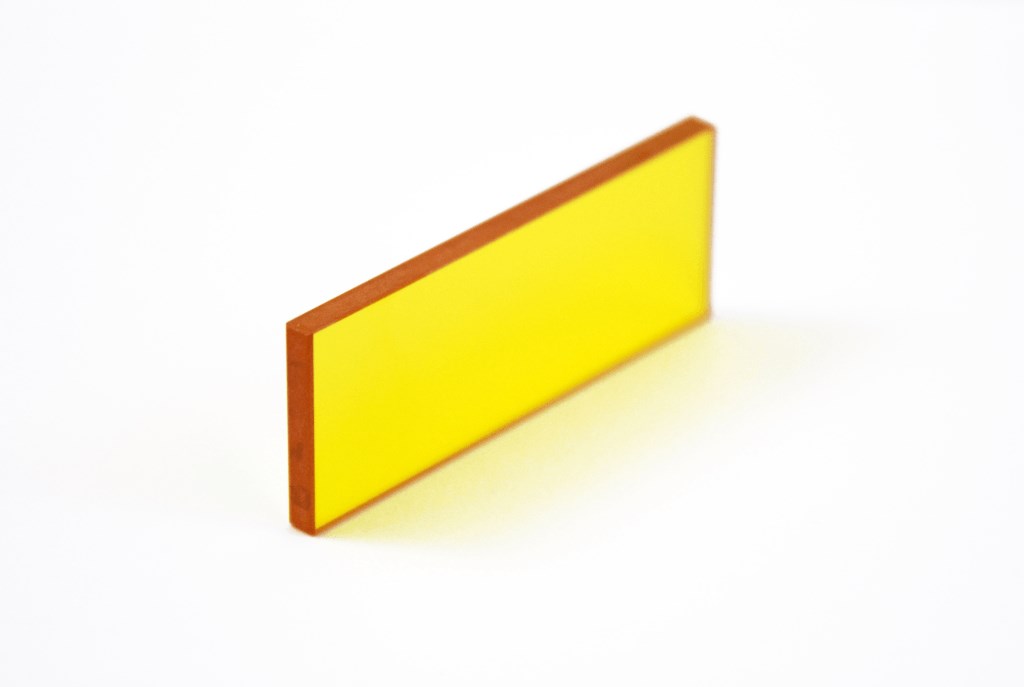
ZnSe CO₂ Laser Protective Windows: An Engineer’s Guide to Material, Coating, AOI, and Application Selection
Primary Keyword: ZnSe CO₂ Laser Protective Window
Secondary Keywords: CO₂ Laser Protective Window, ZnSe Laser Window, CO₂ Laser Optics, Laser Cutting Machine Protective Window, Custom ZnSe Optical Window
Content Type: Technical Product Guide + Application Guide
Target Audience: Laser equipment manufacturers, industrial laser integrators, laser repair companies, distributors, and optical component buyers
Introduction: Choosing a ZnSe Protective Window Is More Than Matching the Wavelength
A ZnSe CO₂ laser protective window may look like a simple optical component, but its performance depends on more than material selection alone.
In an industrial CO₂ laser system, the protective window may be exposed to smoke, dust, process debris, thermal loading, and changing beam angles. A replacement window that matches the original dimensions but uses an unsuitable coating or does not provide sufficient clear aperture may create optical or mechanical compatibility problems.
For this reason, engineers and purchasing teams should evaluate a protective window according to the complete application rather than relying only on the product name or nominal wavelength.
This guide explains how ZnSe protective windows are used in CO₂ laser systems, which specifications matter most, how anti-reflection coatings relate to angle of incidence, and what information should be confirmed before ordering a standard or custom optical window.
What Is a ZnSe CO₂ Laser Protective Window?
A ZnSe CO₂ laser protective window is an optical component designed to transmit the laser beam while helping protect sensitive internal optics from contamination and process debris.
It is commonly installed between the laser processing area and internal optical components such as:
Focusing lenses;
Beam delivery optics;
Galvo scanning optics;
Nozzle assemblies;
Other optical elements located close to the processing zone.
Zinc Selenide, commonly abbreviated as ZnSe, is widely used in infrared optical applications because it is suitable for transmitting CO₂ laser radiation around 10.6 μm.
However, the material alone does not determine whether a window is suitable for a particular machine. The coating design, dimensions, clear aperture, surface quality, mounting method, and operating conditions must also be considered.
The Main Function of a Protective Window
The protective window acts as a replaceable optical barrier.
Instead of allowing smoke, dust, oil vapor, or processing particles to reach more expensive internal optics, the protective window provides a component that can be inspected, cleaned, or replaced during maintenance.
This makes it particularly important in industrial laser systems where contamination is part of the operating environment.
Why Is ZnSe Commonly Used in CO₂ Laser Systems?
Material Compatibility with Infrared Laser Radiation
CO₂ lasers typically operate around 10.6 μm, which falls within the infrared region of the electromagnetic spectrum.
ZnSe is commonly selected for CO₂ laser optics because of its transmission characteristics in this wavelength region. It is used in various components, including:
Protective windows;
Focusing lenses;
Beam delivery optics;
Laser windows;
Other infrared optical elements.
The specific transmission performance depends on the optical design, surface condition, coating, and measurement conditions.
Therefore, a material description such as “ZnSe” should not automatically be interpreted as a complete performance specification.
Material Selection Has Practical Limits
ZnSe is widely used for CO₂ laser applications, but it is not automatically suitable for every optical or mechanical environment.
When selecting a ZnSe window, engineers should also consider:
Operating wavelength;
Laser power and operating mode;
Coating requirements;
Angle of incidence;
Clear aperture;
Mechanical dimensions;
Surface quality;
Mounting stress;
Contamination conditions.
A material can be optically compatible with a wavelength while still being unsuitable for a particular system configuration.
Why Is a Protective Window Important for CO₂ Laser Equipment?
1. Reducing Contamination of Internal Optics
Industrial laser processing can generate smoke, dust, vapor, and particles.
Without adequate protection, contaminants may accumulate on internal lenses or scanning optics. This can affect beam transmission, optical quality, and maintenance requirements.
A protective window provides a replaceable barrier that can be inspected and maintained separately from more expensive internal optical components.
2. Simplifying Maintenance
A damaged or contaminated protective window is generally easier to replace than an internal focusing or scanning assembly.
For laser repair companies and maintenance departments, this can reduce service complexity and help standardize replacement procedures.
3. Supporting Consistent Optical Performance
Contamination on an optical surface can affect the amount of transmitted laser energy and may contribute to scattering or thermal effects.
The actual impact depends on the system design and operating conditions, but maintaining a clean and correctly specified protective window is an important part of optical maintenance.
4. Protecting High-Value Optical Components
In many industrial laser systems, internal optical components are more expensive and more difficult to access than protective windows.
Using a properly selected replacement window can help reduce the risk of contamination reaching those components.
Which Specifications Actually Matter When Selecting a ZnSe Protective Window?
A protective window should be evaluated as both an optical and mechanical component.
The following specifications are commonly important.
SpecificationWhy It MattersWhat to ConfirmMaterialDetermines general wavelength suitabilityZnSe or required optical materialOperating WavelengthDetermines coating and transmission requirementsCO₂ laser wavelength, typically around 10.6 μmDimensionsDetermines mechanical compatibilityDiameter or length × widthThicknessAffects mounting and optical integrationOriginal thickness or drawingCoatingAffects reflection and transmission behaviorAR wavelength band and coating typeClear ApertureDetermines usable beam areaRequired effective apertureSurface QualityCan influence scattering and optical performanceSupplier specificationParallelismCan affect transmitted beam deviationDrawing or inspection dataAngle of IncidenceAffects coating performanceActual AOI rangeOperating ConditionsAffects suitability and service lifeCW/pulsed operation, power, contaminationMaterial
The material should be selected according to the operating wavelength and application requirements.
For CO₂ laser systems operating near 10.6 μm, ZnSe is a commonly used material.
However, the material specification should be confirmed together with the coating and final application conditions.
Dimensions and Thickness
Mechanical compatibility is essential for replacement windows.
Important dimensions may include:
Diameter;
Length and width;
Thickness;
Edge chamfer;
Mounting features;
Orientation marks, where applicable.
A window that is optically suitable but mechanically incompatible may not fit the original holder or may not maintain the intended optical position.
For custom rectangular windows, such as 65 × 85 × 3 mm, a dimensional drawing is particularly useful.
Clear Aperture
Clear aperture refers to the usable optical area through which the laser beam passes.
The outside dimensions of a window do not necessarily equal its effective clear aperture because part of the component may be occupied by mounting or edge areas.
When selecting a replacement window, the required beam area should be compared with the available clear aperture.
This is especially important in scanning systems where the beam position changes across a field.
Understanding AR Coating and Angle of Incidence
What Is an AR Coating?
An anti-reflection coating, commonly called an AR coating, is applied to an optical surface to reduce unwanted reflection and improve transmission within a specified wavelength range.
For a CO₂ laser protective window, the coating is normally designed around the operating wavelength, such as 10.6 μm.
However, AR coating performance is not independent of all operating conditions.
It may vary according to:
Wavelength;
Angle of incidence;
Polarization;
Coating design;
Surface condition;
Manufacturing tolerances.
Therefore, simply specifying “AR coating” may not provide enough information for an engineering evaluation.
What Is Angle of Incidence?
Angle of Incidence, or AOI, is the angle between the incoming laser beam and the normal line of the optical surface.
A simple way to understand AOI is to imagine shining a flashlight onto a piece of glass.
When the flashlight points directly at the glass, the beam is close to normal incidence.
When the flashlight is tilted, the beam reaches the glass at an angle.
The same principle applies to laser optics.
For a flat protective window, the coating performance can change as the beam angle changes.
Why Does AOI Matter in a Galvo Scanning System?
In a fixed optical path, the beam may pass through a window at nearly the same angle.
In a galvo scanning system, however, the beam direction can change as the scanning mirrors move.
This means the protective window may experience a range of incidence angles during operation.
For example, a window mounted close to normal incidence may still experience larger AOI values near the edges of the scanning field.
This is why a coating specification suitable for a fixed beam path may not automatically provide the same performance throughout a wide scanning range.
Engineering Recommendation
When evaluating a protective window for a scanning application, request coating data across the relevant AOI range whenever possible.
A measurement taken at one angle, such as 16°, should not automatically be interpreted as a guaranteed result across 0–30°.
How Should Transmission Data Be Interpreted?
Transmission data should always be considered together with the measurement conditions.
For example, the following statement is incomplete:
T > 98.5% at 10.6 μm.
A more useful technical description should identify:
Measurement wavelength;
Angle of incidence;
Polarization condition, if applicable;
Measurement method, if available;
Whether the value is typical or guaranteed;
Whether the data applies to the final production specification.
Typical Versus Guaranteed Values
A typical value is not necessarily a guaranteed value for every production batch or application.
For example:
Typical transmission performance is provided for reference and should be confirmed against the final coating specification.
This distinction is important when a customer requires a specific optical performance level.
Common Applications of ZnSe CO₂ Laser Protective Windows
CO₂ Laser Cutting Systems
CO₂ laser cutting systems often operate in environments containing smoke, dust, and processing debris.
A protective window can help reduce contamination of internal optics and simplify maintenance.
For cutting applications, engineers should pay attention to:
Laser wavelength;
Power level;
Window dimensions;
Coating compatibility;
Contamination environment;
Mounting configuration.
CO₂ Laser Marking and Engraving Systems
Laser marking and engraving systems may use different optical configurations depending on the machine design.
Protective windows can be used to help isolate internal optics from particles generated during processing.
The appropriate specification should be evaluated according to the actual optical path and operating conditions.
Galvo Scanning Systems
Galvo-based systems require additional attention to beam angle and scanning geometry.
The protective window may experience different AOI values across the scanning field.
In these applications, engineers should confirm:
Scanner type;
Approximate scanning angle;
Window position;
Required clear aperture;
Coating performance across the expected AOI range.
Laser Repair and Replacement Applications
Laser repair companies and service centers often need replacement optical components based on an existing machine specification.
In these cases, the original part number, dimensions, coating information, and application details can be more useful than a general product description.
A replacement window should be evaluated for compatibility with the original system rather than selected only by material and nominal wavelength.
How to Select the Right ZnSe CO₂ Laser Protective Window
Step 1: Confirm the Laser Wavelength
Start with the actual operating wavelength.
For a conventional CO₂ laser, this is commonly around 10.6 μm.
Do not assume that all infrared laser optics use the same material or coating specification.
Step 2: Confirm the Mechanical Dimensions
Record the original component dimensions as accurately as possible.
Recommended information includes:
Diameter or length × width;
Thickness;
Chamfer;
Edge shape;
Mounting method;
Drawing or photograph of the original part.
For replacement applications, even a small dimensional difference can affect installation.
Step 3: Confirm the Coating Requirements
Determine whether the original component uses:
AR coating;
AR/AR coating;
A specified wavelength band;
A particular AOI range.
If the system uses scanning optics, coating performance should be reviewed across the expected incidence-angle range.
Step 4: Confirm the Laser Operating Conditions
Important operating conditions include:
Continuous-wave or pulsed operation;
Laser power;
Beam diameter;
Duty cycle;
Cooling conditions;
Contamination environment.
These details help the supplier assess whether the proposed optical component is appropriate for the intended use.
Step 5: Confirm the Supplier’s Technical Data
Before finalizing an order, request the relevant technical information.
Depending on the application, this may include:
Transmission or reflectance data;
Coating test report;
Dimensional drawing;
Material information;
Surface quality specification;
Inspection report;
Sample availability.
The amount of data required depends on the criticality of the application and the customer's quality requirements.
How Engineers Should Evaluate a Laser Optics Supplier
Price and availability are important, but they should not be the only criteria when selecting an optical supplier.
1. Can the Supplier Provide Complete Specifications?
A reliable supplier should be able to discuss more than product names and prices.
The supplier should understand the relationship between:
Wavelength;
Coating;
Dimensions;
AOI;
Clear aperture;
Application conditions.
2. Can the Supplier Explain Test Conditions?
When technical data is provided, ask:
At what wavelength was it measured?
At what AOI?
Was the result measured or simulated?
Is the value typical or guaranteed?
Does the data apply to the final coating design?
This helps prevent misunderstandings during quotation and technical evaluation.
3. Can the Supplier Support Custom Dimensions?
Industrial laser systems often use non-standard optical components.
A supplier should be able to discuss possible support for:
Non-circular windows;
Rectangular windows;
Custom thicknesses;
Special chamfers;
Custom clear apertures;
Application-specific coatings.
Custom capability should always be confirmed against the actual manufacturing and coating requirements.
4. Can the Supplier Provide Samples or Reports?
For critical applications, samples and inspection data may be useful before volume purchasing.
Potential documents include:
Coating report;
Inspection report;
Dimensional report;
Material information;
Product drawing.
The specific documents available depend on the supplier and product specification.
5. Does the Supplier Explain the Limitations?
A trustworthy supplier should not automatically claim that one protective window is suitable for every CO₂ laser system.
A proper technical evaluation should identify any parameters that still require confirmation.
Clear communication about limitations is part of professional optical sourcing.
What Information Should You Send to an Optical Supplier?
Providing complete information at the beginning of an inquiry can significantly reduce quotation time and technical misunderstandings.
InformationExampleLaser TypeCO₂ laserWavelength10.6 μmLaser Power100 W / 500 WProduct TypeProtective windowDimensionsØ25.4 × 3 mmCoatingAR/ARAOI Range0–30°Scanner ModelGalvo scanner modelApplicationCutting / marking / repairQuantity5 / 10 / 20 pcsDrawing or PhotoRecommendedFor a scanning system, providing the scanner model and approximate angular range can be particularly helpful.
For replacement applications, a photograph of the original component and its mounting position may also help clarify the required specification.
Common Causes of Protective Window Damage or Performance Problems
Possible CausePotential EffectRecommended ConsiderationSmoke or Dust ContaminationReduced transmission or increased absorptionInspect and clean regularlyProcessing DebrisSurface damage or contaminationCheck protective window conditionIncorrect CoatingPoor optical performance at operating wavelengthConfirm wavelength and coating bandIncorrect DimensionsInstallation or alignment problemsCompare with original drawingExcessive Thermal LoadingPossible optical or coating damageReview power and operating conditionsMounting StressPossible deformation or optical deviationCheck mounting methodInsufficient Clear ApertureBeam clipping or reduced usable areaConfirm beam size and scanning fieldUnverified AOI PerformanceUnexpected transmission variationRequest relevant angular dataNot every issue originates from the protective window itself. Laser alignment, contamination control, mounting, beam size, and system operating conditions should also be considered.
Frequently Asked Questions
Can a ZnSe Protective Window Be Used for Every CO₂ Laser?
Not automatically.
Wavelength compatibility is important, but coating design, dimensions, clear aperture, AOI, power conditions, and mounting requirements should also be evaluated.
Is a Transmission Value Measured at 0° AOI Valid for a Scanning System?
Not necessarily.
If the beam angle changes during scanning, performance should ideally be evaluated across the relevant AOI range.
A single measurement at normal incidence may not represent performance at larger angles.
Is ZnSe the Same as a Standard Glass Window?
No.
ZnSe is an infrared optical material commonly used for CO₂ laser applications, while ordinary visible-light glass may not provide the required transmission at 10.6 μm.
Material selection should always be based on the operating wavelength and application.
Should I Choose the Thinnest Protective Window Available?
Not always.
Thickness must match the original optical and mechanical design. Reducing thickness without checking the mounting and optical requirements may affect compatibility.
Does a Larger Window Always Provide Better Performance?
Not necessarily.
A larger outside dimension does not automatically mean a larger usable clear aperture or better optical performance.
The correct size depends on the system design, beam path, and mounting requirements.
Can One Coating Specification Cover All Incidence Angles?
Not automatically.
AR coating performance can depend on wavelength, AOI, polarization, and coating design.
If the application involves a wide scanning range, the coating should be evaluated according to the actual operating angles.
What Should I Do If I Cannot Find the Original Part Number?
Collect as much technical information as possible:
Laser wavelength;
Original dimensions;
Thickness;
Photograph;
Mounting position;
Application type;
Laser power;
Scanner model, if applicable.
This information can help an optical supplier assess a possible replacement.
Conclusion: Select the Window According to the Complete Application
A ZnSe CO₂ laser protective window is more than a replaceable piece of infrared material.
Its suitability depends on the relationship between optical wavelength, coating design, angle of incidence, clear aperture, mechanical dimensions, and actual operating conditions.
For fixed-beam applications, the primary focus may be wavelength compatibility, dimensions, and coating performance.
For galvo scanning systems, AOI and scanning geometry become particularly important.
For laser repair and replacement projects, accurate dimensional information and original system details can significantly reduce compatibility risks.
The best selection process is therefore not simply:
“Find a ZnSe window for a CO₂ laser.”
Instead, it should be:
“Match the material, coating, geometry, and operating conditions to the actual laser system.”
If you are sourcing a standard replacement or custom ZnSe CO₂ laser protective window, share the wavelength, dimensions, coating requirements, application details, and available drawings or photographs with Eternal Optics. Our team can help review the key optical and mechanical requirements before preparing a quotation.
About Eternal Optics
Eternal Optics provides industrial laser optics and optical components for laser equipment manufacturers, distributors, integrators, and service applications.
Our product-related technical discussions focus on matching optical components with actual application requirements, including wavelength, dimensions, coatings, scanning conditions, and replacement needs.
For product availability, specifications, or custom optical requirements, please contact our team with the relevant technical information.